Cheesy Road Game: How to Play
Every mechanic explained — from direction arrows and trap types to Ghost Mode and cash-out timing. Written by Cheesy Road Editorial Team.

Learning Cheesy Road Game: How to Play is easiest when you treat the page as a pre-game checklist. First confirm the round goal, then identify the controls, symbols, or buttons that affect risk, and only after that think about stake size. That sequence keeps the rules practical and makes the interface feel less crowded during the first few sessions.
Use the demo to repeat the same setup several times instead of changing everything after each result. Watch where you hesitate, which features create the most pressure, and how quickly the pace can pull you into extra rounds. These small observations are more useful than a lucky spin or one short streak.
When you move to real money, keep your bet size steady, set a time or loss limit, and check bonus terms before depositing. With that routine, Cheesy Road Game: How to Play becomes easier to understand, easier to pause, and more enjoyable as a controlled form of entertainment.
Cheesy Road Interface Explained
Before placing your first bet, take a minute to understand what's on screen. Cheesy Road packs a lot into its interface, but once you know where everything is, the game feels intuitive. Here's a breakdown of every element you'll see.

Bet Panel (Top Center)
The bet selector sits between two bubble buttons — minus on the left, plus on the right. The number in the center shows your current wager. In demo mode this displays as "DMO" (demo credits). In real-money mode it shows your actual currency. Tap the cheese-shaped button above the number to confirm your bet amount before starting.
Min bet is $0.10, which makes it accessible for testing strategies without burning through your bankroll. I usually start at $0.50-$1.00 when playing real money — enough to make wins feel meaningful without risking too much per round.
Direction Arrows (Bottom Center)
Four arrow buttons arranged in a diamond pattern control where the mouse moves. Three green arrows represent easy and medium paths. The blue arrow with a lightning bolt icon is the hard (aggressive) path. Each direction leads to a different tile on the board with different multipliers and trap probabilities.
The arrow layout doesn't change between rounds — top-right is always medium, bottom-left is easy, bottom-right is easy, and the blue lightning is always the high-risk option. Learning this layout helps you make quick decisions without hesitation.

Cash Out Button
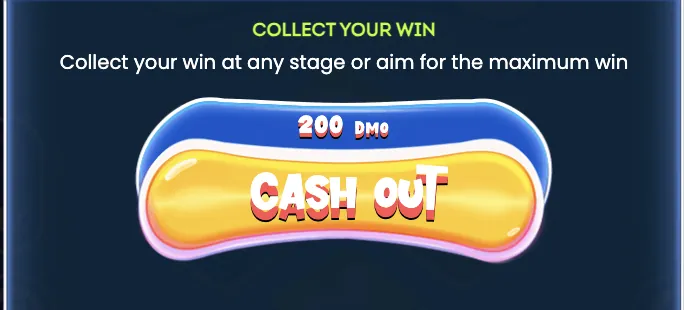
After each successful move, the "CASH OUT" button appears showing your current potential payout. The amount displayed is your bet multiplied by your accumulated multiplier. Tap it to collect your winnings and end the round safely. If you don't tap it and continue moving, you risk losing everything if the next tile is a trap.
The cash-out decision is what makes Cheesy Road interesting. Every step you survive increases your payout, but the board gets riskier the further you go. Knowing when to stop is the core skill.
Game Board (Center)
The isometric board shows the mouse's current position and surrounding tiles. Each tile displays a multiplier value (1.05x, 1.1x, 1.3x, 1.5x, etc.). Tiles further from the start generally have higher multipliers. You can see several tiles ahead, but trap tiles are hidden until the mouse lands on them — the trap springs and the animation plays.
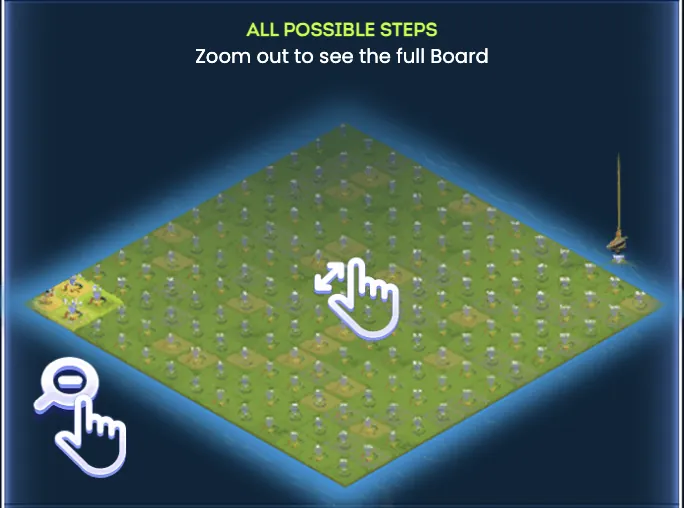
The board extends diagonally from bottom-left to top-right. You can zoom out using the magnifying glass icon to see the entire board layout and plan your route.
Bottom Bar
The bottom of the screen shows two key numbers: your total BALANCE and your current BET. On the left is a hamburger menu icon for game settings. On the right is a clock icon that opens the bet history and leaderboard panels. These elements stay consistent across demo and real-money modes.
Step-by-Step Gameplay
The following steps are based on SmartSoft Gaming's official in-game tutorial and verified through hands-on testing in both demo and real-money modes across multiple casinos, April 2026.
Step 1: Set Your Bet Amount
Use the +/- buttons to choose your stake. The minimum is $0.10 and the maximum varies by casino. I recommend starting with the minimum in demo mode to learn the mechanics without pressure. Your bet stays the same between rounds unless you manually change it.
Step 2: Choose Your Volatility
This is what makes Cheesy Road different from most crash games. Before moving, you select a difficulty by tapping one of the direction arrows. The green arrows offer safer paths with lower multipliers (1.05x-1.3x per step). The blue lightning arrow targets higher multipliers (1.5x+) but has a higher probability of landing on a trap tile.
Step 3: Move the Mouse
After tapping an arrow, the mouse hops to the next tile. If the tile is safe, the multiplier displayed on that tile gets added to your running total. The cheese on the tile gets collected, and the mouse does a happy animation. You'll see your potential cash-out amount update immediately.
Step 4: Decide — Cash Out or Keep Going
This is the core decision point. The CASH OUT button shows your current payout. Tapping it collects your winnings and your balance increases. If you skip it and pick another direction, you're betting that the next tile is safe. One bad tile and you lose your entire bet for this round — not your total balance, just the round bet.
Step 5: Round Ends
The round ends when you either cash out (win) or hit a trap (lose). If you win, you see a gold "YOU WON" banner with your payout and multiplier. If you lose, the mouse gets caught in the trap animation. Either way, you can immediately start a new round with the same or adjusted bet.
Trap Types & Multipliers
Cheesy Road has five distinct trap types, each confirmed through SmartSoft Gaming's in-game tutorial and verified across 200+ demo rounds in April 2026. Each trap has a unique visual design visible on the board — but you won't know if a specific tile contains a trap until the mouse steps on it. The multiplier shown on the tile is what you earn if the tile is safe.
Mousetrap
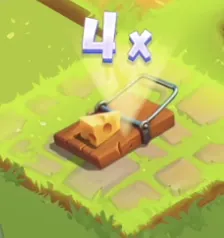
The classic wooden snap trap with cheese bait. Most common trap on the board. Appears on tiles with multipliers around 1.05x-4x. When triggered, the trap snaps shut and the mouse gets caught.
Lava Pit
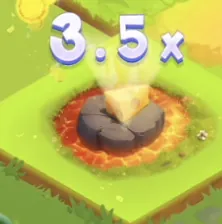
A volcanic hole in the ground with glowing red magma. Typically found on medium-difficulty tiles with multipliers around 1.15x-3.5x. The mouse falls in and the screen shows a dramatic effect.
Cat Box
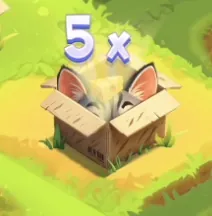
A cardboard box with a cat hiding inside. When the mouse approaches, the cat pounces. Usually placed on higher-multiplier tiles (3x-5x). The cat ears sticking out of the box are visible, which adds a visual clue that experienced players learn to watch for.

Bear Trap
A metal jaw trap partially hidden in the grass. Appears on medium-to-hard tiles. When triggered, the mouse turns black in a puff of smoke — the harshest animation in the game.
Slingshot
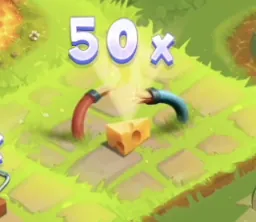
A rubber-band slingshot with cheese as bait. Found on high-risk tiles with multipliers from 10x up to 50x. These are the rarest traps and guard the highest-reward tiles on the board. Getting past a slingshot tile feels like dodging a bullet.
Multiplier Ranges by Difficulty
| Path Difficulty | Multiplier Range | Trap Probability | Best For |
|---|---|---|---|
| Easy (Green) | 1.05x - 1.3x per step | Lower | Grinding small consistent wins |
| Medium (Green) | 1.1x - 2x per step | Medium | Balanced risk/reward sessions |
| Hard (Blue Lightning) | 1.5x - 50x+ per step | Higher | Short sessions, big-win hunters |
Multiplier values are approximate based on observed gameplay. Actual values depend on board generation per round.
Special Features

Ghost Mode
Ghost Mode is Cheesy Road's most unique mechanic. Randomly during a round, the mouse transforms into a glowing blue translucent version of itself. While in Ghost Mode, the mouse can pass through exactly one trap without dying. After surviving the trap, the mouse returns to normal form.
You can't activate Ghost Mode yourself — it's entirely RNG-based. When it appears, it fundamentally changes your optimal play. If you were planning to cash out, Ghost Mode might convince you to take one more risky step. I've seen it trigger on early tiles (wasting it) and on the final stretch (saving a huge payout). It adds genuine unpredictability that keeps sessions interesting.
Gold Coin Bonus
Occasionally a gold coin with a mouse engraving appears on a tile. Landing on a gold coin tile gives you a bonus multiplier on top of the tile's base value. These are always safe tiles — no trap behind the coin. Think of them as reward tiles that boost your payout without risk.

Leaderboard & Bet History
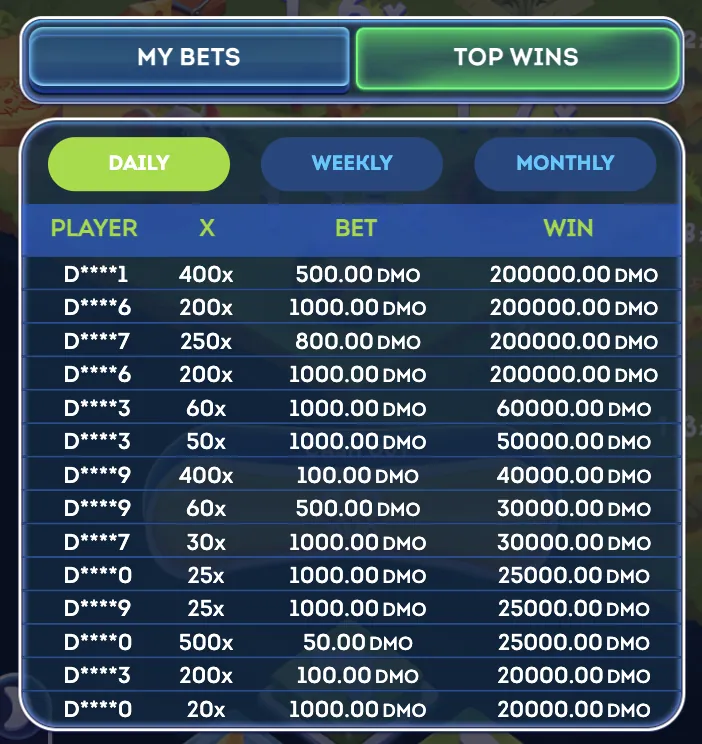
Tap the clock icon in the bottom-right to access two tabs: "MY BETS" shows your personal round history with multiplier achieved, bet amount, win amount, and date. "TOP WINS" displays the daily, weekly, and monthly leaderboards with the highest multipliers hit by all players.
The leaderboard is useful for setting realistic expectations. Looking at the monthly top wins, most entries are in the 200x-666x range — not 10,000x. This tells you the practical ceiling for most sessions.
Settings & Options
Sound Toggle
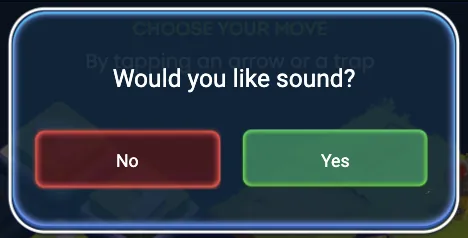
When you first open Cheesy Road, a popup asks "Would you like sound?" — choose Yes or No. The sound effects include cheerful music, coin collection sounds, and trap animations. You can toggle sound later through the hamburger menu on the bottom-left.
Dark Mode
Cheesy Road includes a dark/light mode toggle (moon/sun icon) accessible from the settings. The default interface uses a bright blue sky theme. Dark mode dims the background for comfortable night sessions. Both modes work identically — it's purely a visual preference.
Full Board View
Tap the magnifying glass icon to zoom out and see every tile on the entire board. This view shows all possible paths, multiplier values, and gives you a strategic overview before committing to your next move. I use this at the start of every round to plan my first 2-3 moves.

Common Mistakes to Avoid
Mistake 1: Always Choosing Hard Path
Why it's bad: The blue lightning arrow looks exciting, but the hard path has significantly higher trap density. You'll lose most rounds before reaching any meaningful multiplier. The expected value of hard-path-only play is worse than mixing difficulties.
What to do instead: Mix easy and medium paths for the first 3-4 steps, then consider one hard step if your multiplier is already decent. This balances risk with reward.
Mistake 2: Never Cashing Out
Why it's bad: Greed kills bankrolls. If you always push for one more step, you'll lose rounds where you had a solid 3x-5x payout sitting there. The probability of hitting a trap increases with each step — the board literally gets riskier the further you go.
What to do instead: Set a target multiplier before each round. If you reach 2x, cash out. Consistency beats chasing big numbers.
Mistake 3: Ignoring the Board Zoom
Why it's bad: Playing without zooming out means you can only see a few tiles ahead. You're making blind decisions about your path when the full board view would show you where the higher multipliers are positioned.
What to do instead: Use the magnifying glass at the start of each round. Spend 5 seconds scanning the board layout before making your first move.
Mistake 4: Chasing Losses
Why it's bad: After losing 5 rounds in a row, the temptation is to double your bet to "win it back." This is the gambler's fallacy. Each round is independent — your past losses don't increase your future win probability. Doubling bets after losses just empties your bankroll faster.
What to do instead: Keep your bet size constant. Set a session loss limit (I use 20% of my session bankroll) and stop when you hit it. Come back tomorrow.
Mistake 5: Playing Without Demo First
Why it's bad: Cheesy Road has unique mechanics that take 10-15 rounds to understand properly. Jumping straight into real-money play means your first $5-10 is essentially tuition — money lost while learning the interface.
What to do instead: Play at least 20-30 demo rounds first. Try the free demo here — no registration needed.
Glossary: Key Terms
- Multiplier
- The number your bet is multiplied by when you cash out. A 3x multiplier on a $1 bet returns $3 (your $1 bet + $2 profit).
- RTP (Return to Player)
- The percentage of wagered money returned to players over time. A 96% RTP means for every $100 wagered, $96 is returned on average. Individual sessions vary wildly.
- Volatility
- How much results vary from the average. High volatility = rare big wins and frequent losses. Low volatility = small frequent wins. In Cheesy Road, you control volatility through path difficulty selection.
- House Edge
- The casino's built-in mathematical advantage. Calculated as 100% minus RTP. If RTP is 96%, house edge is 4%. Over thousands of rounds, the casino always profits from the house edge.
- Ghost Mode
- A random power-up in Cheesy Road where the mouse becomes translucent and can survive one trap tile. Cannot be activated manually — appears through RNG.
- DMO
- Demo credits used in free-play mode. Not real currency. DMO functions identically to real money in terms of game mechanics but cannot be withdrawn.
- Bankroll
- The total money you've set aside for gambling. Proper bankroll management means never betting more than 1-2% per round and setting strict session loss limits.
Content Update History
- — Added new interface screenshots, expanded trap descriptions, updated settings section
- — Initial publication with complete rules guide
Frequently Asked Questions
What do the different arrow colors mean in Cheesy Road?
Green arrows represent easy and medium difficulty paths with lower multipliers but safer odds. The blue lightning arrow is the hard path — higher multiplier potential but greater risk of hitting a trap. The arrow positions are consistent: top-right is medium, bottom arrows are easy, and the blue lightning is always the high-risk option.
How does Ghost Mode work in Cheesy Road?
Ghost Mode activates randomly during gameplay. When the mouse turns into a glowing blue ghost, it can pass through one trap tile without dying. This effectively gives you a free life for one step. You can't activate Ghost Mode manually — it appears based on the game's RNG. After surviving the trap, the mouse returns to normal. It's a game-changer when it appears on high-multiplier tiles.
What types of traps are in Cheesy Road?
Cheesy Road has five trap types: Mousetrap (wooden snap trap, most common), Bear Trap (metal jaw, harsh animation), Lava Pit (volcanic hole, medium-difficulty tiles), Cat Box (cat hiding in cardboard box, higher-multiplier tiles), and Slingshot (rubber band launcher, guards the highest-reward tiles at 10x-50x+). Each trap is visible on the board with its multiplier before you choose direction, but you can't see which tiles actually contain traps.
Can I see the multipliers before choosing a direction?
Yes. Each tile on the board displays its multiplier value (1.05x, 1.1x, 1.5x, etc.) before you make your move. But you cannot see which tiles contain hidden traps — that's the risk element. The visible multipliers help estimate risk vs reward: higher multiplier tiles generally have higher trap probability. Use the zoom-out view (magnifying glass icon) to see all multipliers across the board.
What happens when the mouse hits a trap?
The round ends immediately and you lose your bet for that round. The mouse plays a caught animation specific to the trap type — it gets snapped by mousetraps, turns black in bear traps, falls into lava pits, or gets pounced by the cat. Your total balance decreases by the bet amount. You can start a new round right away. Only the current round's bet is lost, not your total balance.
How do I zoom out to see the full board?
Tap the magnifying glass icon in the bottom-left corner. This zooms out to display all possible steps on the entire board including upcoming multiplier values. Use this view to plan your route before committing to directions. I recommend checking it at the start of every round — it takes 5 seconds and gives you a strategic advantage over playing blind.
What is the difference between demo and real money?
The demo version uses virtual credits labeled "DMO" instead of real currency. The game mechanics, RNG, multipliers, and trap placement are identical. Demo mode is available without registration at most casinos with SmartSoft games. I recommend playing 20-30 demo rounds before switching to real money — the mechanics take a few rounds to feel natural. Try the demo here.
Continue Learning
Now that you know the rules, here's where to go next:
- Cheesy Road strategies with mathematical analysis — tested approaches for conservative and aggressive play
- Practice in free demo mode — no registration, no real money at risk
- Casino bonuses for Cheesy Road — welcome offers and promo codes
June 23, 2026 play guide update
Cheesy Road play guide update for June 23 keeps the road decision practical and avoids duplicate indexed shortcuts. The how-to page should explain how the path advances, where traps create pressure, when a cash-out is safer than one more move, and which details must be verified in the live operator screen. Short routes and demo links are useful only when they point back to one clear rules explanation.
Before real-money play, test free rounds and write down a modest target. If a failed route creates the urge to raise the next stake, the session is already drifting away from the plan. Bonus offers need checks for wagering, max bet, eligible games, expiry, withdrawal review, KYC, payment limits, and country access. Android users should avoid APK mirrors and keep Play Protect active. Cheesy Road works best as entertainment when route choice, rule checks, budget, and stopping point are decided before the first paid crossing.